

Gearboxes
Maximizing efficiency: The global shift to IE4 motors

Author: Archbold Sibanda (MSc),. I-MAK Gearboxes And Drives, Inetrnational Sales Engineer
In the dynamic landscape of electric motors, achieving optimal energy efficiency is a paramount goal. This pursuit is guided by international standards, with the International Electrotechnical Commission (IEC) at the forefront. The IEC’s pivotal role in standardizing electrical and electronic technologies is evident in its establishment of crucial standards, particularly IEC 60034-30, a guideline for the efficiency classes of single-speed, three-phase, cage-induction motors, commonly known by their IE ratings.
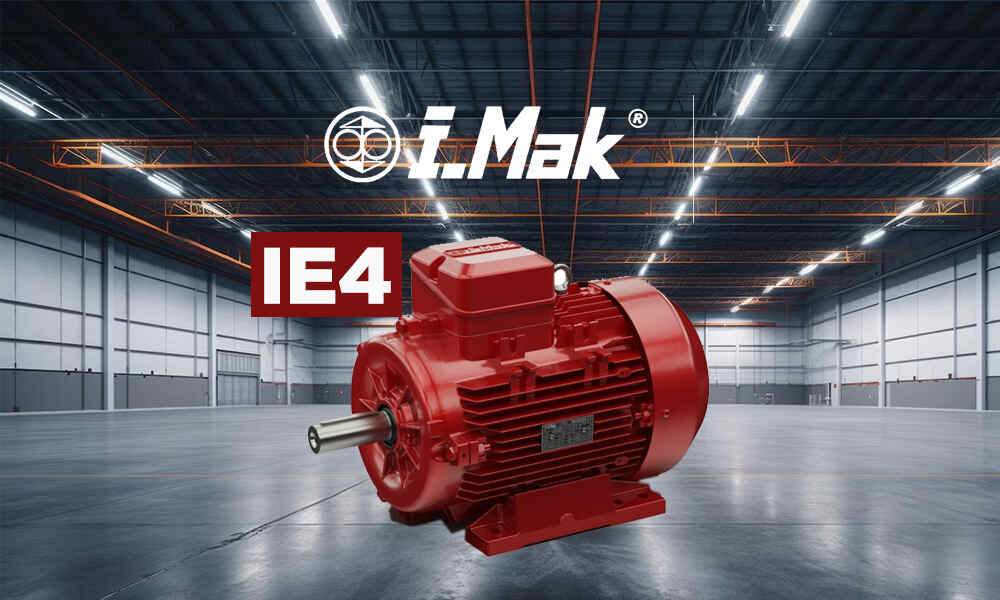
The IE classifications—IE1 (Standard Efficiency), IE2 (High Efficiency), IE3 (Premium Efficiency), and IE4 (Super Premium Efficiency)—serve as benchmarks based on motor efficiency at full load. These classifications aim to incentivize the widespread adoption of energy-efficient motors across various applications.
Collaboration is key in the determination and implementation of these standards, involving industry experts, manufacturers, and regulatory bodies. While some countries develop their own regulations, many adopt international standards, aligning efforts to promote energy efficiency and environmental sustainability.
In line with these global efforts, I-MAK proudly manufactures motors with IE4 efficiency class for 75 kW and above. This strategic decision aligns with the Turkish government’s energy policies, showcasing the impact of governmental influence on industry practices.
Commendably, the drive for efficient energy consumption is not confined to European nations. Countries worldwide, including Morocco, Ecuador, Kenya, and Ghana, are enforcing policies to phase out low-efficiency motors. The responsibility lies not only with governments but also with motor manufacturers, encouraging customers to invest in higher efficiency options. Despite higher initial costs, the amortization period is remarkably swift, as demonstrated by the attached graph.

The graph illustrates a 7-year cost analysis for a 75 kW IE4 motor. Operating 24 hours, 5 days a week, the energy savings surpass the acquisition cost by the second year. Over 7 years, energy savings alone amount to $20,720, doubling the motor’s purchase cost.
Regrettably, in regions with soaring energy costs, factories still face closure due to financial constraints. However, with the rise of high-efficiency regulations, these scenarios should become obsolete. The shift toward IE4 motors not only marks a technological advancement but also a collective commitment to a sustainable and cost-effective industrial future.
Finally, the question asked prior is actually about sustainability, the use of low efficiency motors poses risks to the environment, economy, and overall well-being of future generations i.e. our grand children. Transitioning to higher-efficiency technologies is essential for creating a more sustainable and resilient future.
