

Bearings
As bearing designs urge to change

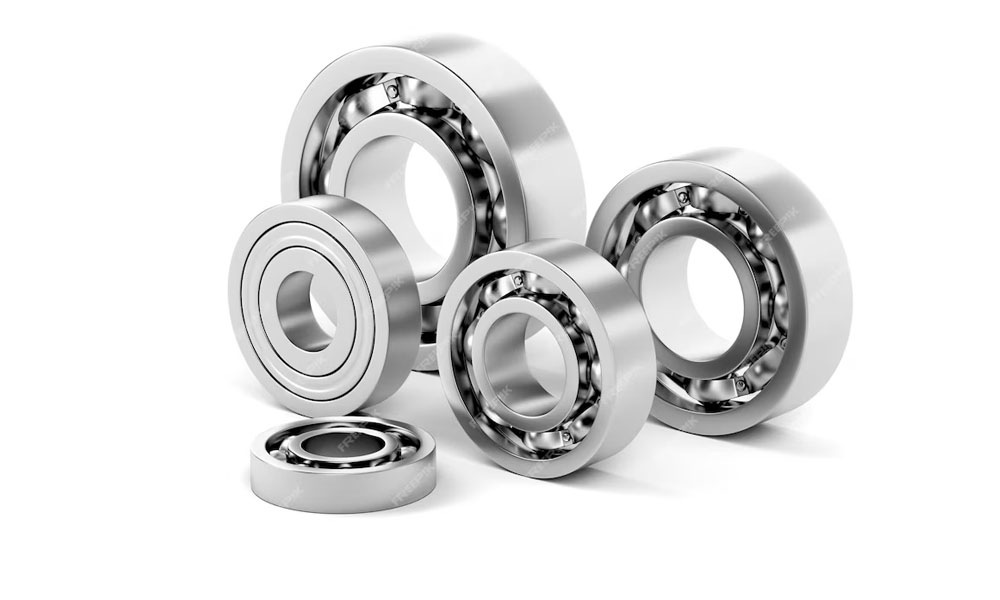
The impact of EV transmissions on bearing design and specifications
There are generally two main designs for automotive transmissions used in electric vehicles (EVs)- a coaxial design and an offset design. The coaxial design could be considered more compact, while the offset design is similar to configurations used in some EVs today. One offset design is analogous to a transfer case used to distribute torque between axles.
The coaxial design utilizes a proven planetary gearset arrangement. A key difference with newer EV transmission designs is the large increases in power and speed requirements, necessitating premium bearing features from suppliers. On the load-carrying side, manufacturers are specifying features like nitriding, carbon-nitriding, refined microstructures, and specialized heat treating to enhance performance.
For speed-control applications, design aspects to manage rotational velocity include tighter tolerances, controlled surface finishes, customized cages, and reduced runout.
Main challenges for bearings in EV transmissions
Each area of an EV transmission poses unique bearing challenges. Motor bearings and input gear bearings may be on the same shaft or separate, and sometimes utilize shared bearings. The intermediate shaft then connects these to the differential, again with its own set of issues to address. Effective insulation and isolation are critical considering electrical current effects on motor bearings. Input gears introduce high loads from meshing. Intermediate shafts have space constraints and opposing loads from connected components. Differentials experience classic noise generation challenges. Overall, each transmission subsystem warrants dedicated consideration.
Is there a shift in bearing technology preferences?
While some EV transmissions exclusively use ball bearings due to proven performance, new manufacturers are exploring alternatives to differentiate. Some consider tapered roller bearings for differentials to reduce noise, or even on intermediate shafts. A variety of bearing material and design combinations are under evaluation. The optimal solution depends on priorities like refinement, efficiency or costs. Multiple answers may exist within a single application.
Impact of bearings on NVH Performance?
Bearings have an indirect rather than direct effect on noise, vibration and harshness (NVH). Their role is controlling gear alignment and preventing excitation of various noise characteristics that occur in different spatial planes as gears mesh and tilt. Efficient misalignment management is key to minimizing noise generation.
Impact of bearings on efficiency in Range-Critical EVs?
As with noise, bearings do not have a single, static efficiency rating. Their contribution depends highly on operating conditions like temperature, lubrication level and loading. While ball bearings are commonly viewed as less efficient than tapered rollers, performance is dynamic based on these factors as well as the lubrication environment. The system-level efficiency impact incorporates these usage dependencies rather than attributes of the bearings alone.
Bearing requirements shall continue to evolve or not?
As customer needs change regarding EV performance, costs, NVH and other factors, bearing requirements will likewise continue adapting. Manufacturers must stay abreast of evolving transmission designs and applications to ensure bearing solutions support priorities around attributes like reliability, refinement, energy efficiency and more. Ongoing research is critical to meeting the technology needs of this growing automotive sector.



