

Actuators
Examining SMC Compact Cylinder / High Power Type CQE

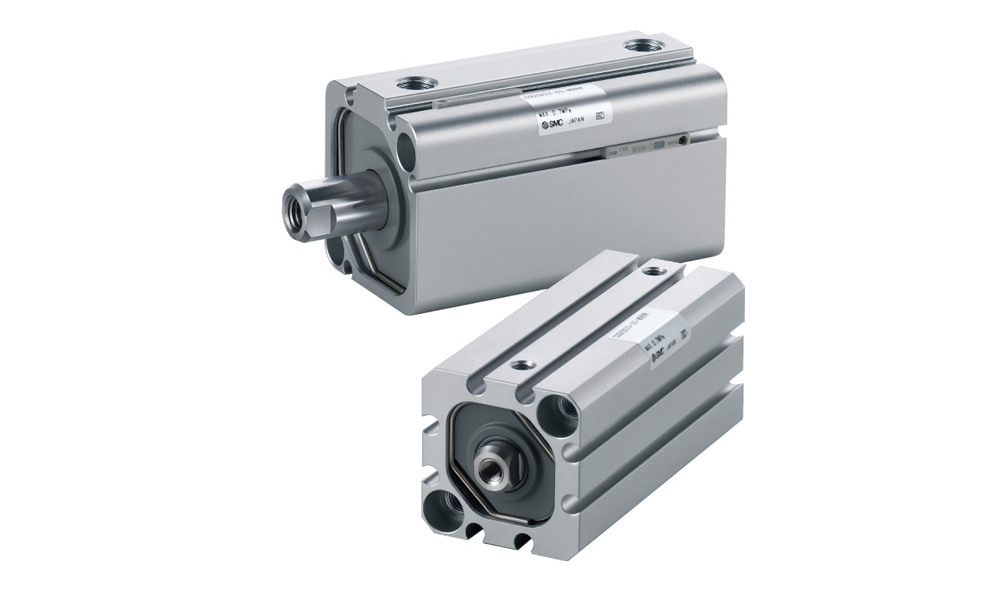
We’ve examined SMC Compact Cylinder High Power Type CQE Linear Actuator for you.
The SMC CQE cylinder is a compact automation tool, but like any specialized ones, its performance hinges on understanding its boundaries and tailoring its use to specific needs. One key limitation lies in its stroke length, which typically maxes out around 300 mm. This constraint stems from its design philosophy: prioritizing a small footprint over extended travel. For applications requiring longer movements—such as conveyor sorting systems or large-scale material transfers—this restricted stroke could pose challenges. In such scenarios, engineers might pivot to SMC’s MGPM guided cylinder series, which retains high-force capabilities while offering strokes up to 2,000 mm. The MGPM’s integrated guide rods add stability for long-stroke operations, ensuring precision even under heavy loads.
Another consideration is the CQE’s limited lateral load tolerance, inherent to its non-guided design. While the cylinder excels in linear thrust, side forces exceeding 10% of its maximum thrust (e.g., from misaligned fixtures or uneven loads) can cause premature wear on the piston rod or misalignment. For example, in a robotic welding arm where lateral forces arise from angled tooling, pairing the CQE with an external guide system like SMC’s MXQ linear motion unit becomes critical. The MXQ’s robust rails and bearings absorb these off-axis forces, preserving the cylinder’s alignment and extending its lifespan. Without such safeguards, operators risk frequent downtime for repairs—a costly tradeoff in high-throughput environments like automotive assembly lines.
To fully unlock the CQE’s potential, meticulous air preparation is non-negotiable. Contaminants like dust, moisture, or oil aerosols in compressed air can degrade seals and impair performance over time. Installing a 40-micron filtration system and inline lubricator ensures clean, conditioned air reaches the cylinder. For instance, in a dusty packaging plant, this setup prevents abrasive particles from scratching the cylinder bore, while a light mist of ISO VG32 lubricant reduces seal friction. Neglecting this step could slash the cylinder’s service life by half, especially in harsh environments like foundries or woodshops.
Cushion tuning is another lever for optimization. The CQE’s adjustable pneumatic cushions act as “shock absorbers” at the end of each stroke, softening the piston’s impact. By tweaking these cushions with a simple screwdriver, users can tailor deceleration to match varying loads. For example, in a high-speed stamping press handling both lightweight aluminum and dense steel parts, dynamic cushion adjustments prevent metal-on-metal clatter, reducing noise from 85 dB to a safer 70 dB. Over-tightening the cushions, however, can cause sluggish retraction, so iterative testing is key. Some advanced users even pair this with SMC’s speed controllers (e.g., AS2201-F02) to fine-tune acceleration curves, achieving buttery-smooth motion in precision tasks like semiconductor handling.
Proactive maintenance further safeguards reliability. While the CQE’s seals are engineered for longevity—lasting up to 5,000 km under ideal conditions—regular inspections are crucial. In humid climates, for instance, monthly checks for seal swelling or corrosion on the piston rod can preempt failures. For non-lubricated models, applying a thin film of grease annually (e.g., SMC’s PG700) keeps internal friction low. Operators in food-grade facilities might opt for NSF-certified lubricants to meet hygiene standards.
Finally, leveraging SMC’s technical ecosystem can elevate integration. Tools like FluidSIM simulation software allow engineers to model the CQE’s behavior in virtual setups, predicting air consumption or cycle times before installation. Meanwhile, downloadable 3D CAD models streamline mechanical design, ensuring seamless compatibility with existing machinery. For complex projects—say, a multi-axis packaging robot—consulting SMC’s engineering support can uncover synergies, such as pairing the CQE with compact valves (e.g., SY3000 series) to minimize control cabinet space.
By addressing these nuances, the SMC CQE transforms from a mere component into a precision tool. Its compact power shines in applications like high-speed pressing, robotic articulation, or precision clamping, but only when its limits are respected and its setup refined. In the hands of a informed user, it becomes a linchpin of efficiency, blending brute force with the finesse needed for modern automation’s toughest challenges.
