

Robot Technologies
Comparison of main industrial robotics manufacturers

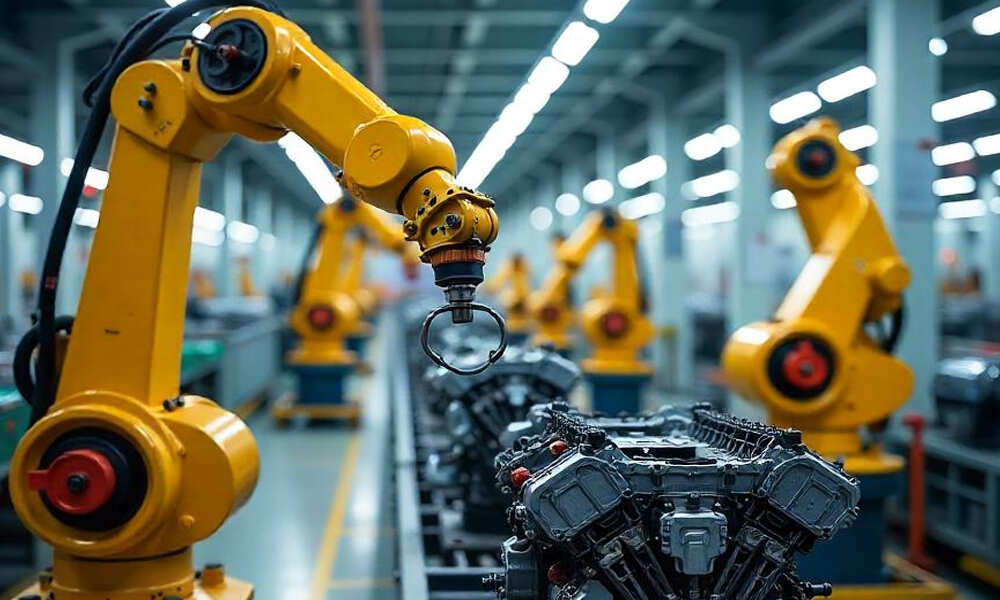
We’ve made an evaluation and comparison of main industrial robotics manufacturers.
Here’s a structured comparison of the main industrial robotics brands, highlighting their key features, applications, and unique strengths:
Comparison Table of Main Industrial Robotics Brands
| Brand | Origin | Key Features | Payload Capacity | Reach | Precision | Industries Served | Collaborative Robots |
|---|---|---|---|---|---|---|---|
| FANUC | Japan | Reliability, CNC integration, CR cobots | 0.5 kg – 2300 kg | 0.7m – 4.7m | ±0.01mm | Automotive, Electronics, Logistics | CRX Series |
| ABB | Switzerland/Sweden | RobotStudio software, YuMi/GoFa cobots, precision | 0.5 kg – 800 kg | 0.6m – 6.5m | ±0.01mm | Automotive, Electronics, Food | YuMi, GoFa, SWIFTI™ |
| KUKA | Germany (Chinese-owned) | Heavy payloads, LBR iiwa cobot, flexible integration | 3 kg – 1300 kg | 0.6m – 6.2m | ±0.02mm | Automotive, Aerospace, Foundries | LBR iiwa |
| Yaskawa (Motoman) | Japan | Wide product range, high-speed robots, welding expertise | 1 kg – 2300 kg | 0.4m – 4.5m | ±0.01mm | Automotive, Metalworking, Logistics | HC Series |
| Kawasaki Robotics | Japan | Durability, dual-arm SCARA (duAro), semiconductor focus | 2 kg – 1500 kg | 0.5m – 3.9m | ±0.02mm | Automotive, Semiconductors, Pharma | duAro |
| Epson Robots | Japan | SCARA specialists, integrated vision systems | 0.2 kg – 20 kg | 0.4m – 1.5m | ±0.01mm | Electronics, Medical, Consumer Goods | N/A (focused on precision) |
| Universal Robots | Denmark | Pioneer in cobots, user-friendly interface, lightweight | 0.5 kg – 16.5 kg | 0.5m – 1.8m | ±0.03mm | SMEs, Packaging, Machine Tending | UR3e, UR5e, UR10e, UR16e |
Detailed Brand Overviews
- FANUC
- Strengths: Legendary reliability, deep integration with CNC systems, and a broad range for heavy-duty tasks.
- Applications: Material handling, welding, painting, and assembly in automotive plants.
- Software: Teach pendants with KAREL programming; requires technical expertise.
- Cobots: CRX Series for safe human-robot collaboration.
- ABB
- Strengths: Precision, simulation software (RobotStudio), and strong PLC integration.
- Applications: Assembly, packaging, and painting. YuMi cobot excels in small-part assembly.
- Software: RAPID programming language with intuitive interfaces.
- Innovation: SWIFTI™ cobots for high-speed industrial tasks.
- KUKA
- Strengths: High payloads, flexibility, and automotive dominance (e.g., BMW).
- Applications: Heavy lifting, automotive assembly, foundry operations.
- Software: KUKA.PLC for seamless automation integration.
- Cobots: LBR iiwa for sensitive tasks requiring force feedback.
- Yaskawa/Motoman
- Strengths: Expertise in arc welding and palletizing; high-speed Motomini for electronics.
- Applications: Welding, palletizing, and cleanroom environments.
- Software: Motoplus IDE for advanced customization.
- Kawasaki Robotics
- Strengths: Durable robots for harsh environments; duAro dual-arm SCARA for flexible tasks.
- Applications: Semiconductor manufacturing, pharmaceuticals, automotive.
- Epson Robots
- Strengths: SCARA dominance, built-in vision guidance, and compact design.
- Applications: High-speed pick-and-place, electronics assembly, lab automation.
- Universal Robots
- Strengths: Cobot market leader, easy deployment, and affordability for SMEs.
- Applications: Machine tending, packaging, and collaborative assembly.
- Software: Polyscope interface for drag-and-drop programming.
Key Considerations
- Payload & Reach: Heavy tasks favor KUKA/FANUC; precision tasks lean toward Epson/ABB.
- Ease of Use: UR and ABB lead with intuitive software; FANUC/KUKA require more expertise.
- Cobots: UR dominates SMEs, while ABB/KUKA target industrial-grade collaboration.
- Industries: Automotive relies on FANUC/ABB/KUKA; electronics prefer Yaskawa/Epson.
This comparison provides a snapshot of each brand’s niche, helping businesses align robot capabilities with operational needs.



