

Research&Report
Solar Energy Cooperatives in the World and in Türkiye: The Democratic Face of Sustainable Energy

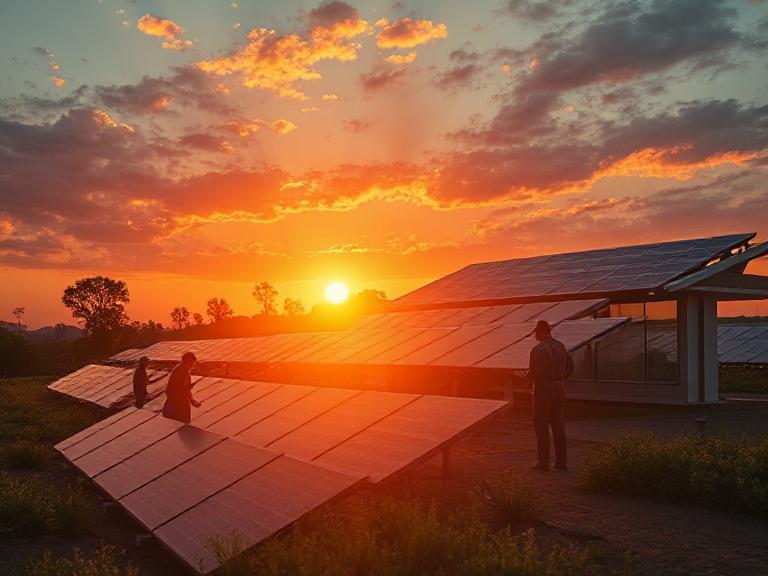
Solar energy cooperatives are democratic energy production models where local communities jointly own and manage solar energy projects. These cooperatives decentralize energy production, enabling citizens to actively participate in the energy transition and playing a significant role in achieving sustainable energy goals (Özgül et al., 2020).
The Working Mechanism of Solar Energy Cooperatives
These cooperatives are democratic governance models based on the principle of “one member, one vote.” Members contribute both financially and financially to solar panel installations. The generated electricity is sold to the grid, and the revenue generated is distributed equitably among members.
Cooperative processes generally involve the following steps: identifying suitable locations and planning through feasibility studies; establishing an investment budget with members, grants, and loans; installing solar panels and infrastructure; operating and maintaining the system; and finally, equitably distributing the revenue generated from the energy generated.
The Position of Solar Energy Cooperatives in the World
The majority of renewable energy cooperatives are concentrated in Northern Europe, the United States, and Canada. As of 2021, there were 49 active renewable energy cooperatives in Canada (Pigeon et al., 2022). Cooperatives in the US provide energy to approximately 12% of the country’s population (according to NRECA data) (ILO, 2013).
The Situation in Europe
Solar and renewable energy cooperatives are widely distributed across Europe: according to REScoop data, there were approximately 3,000 RE cooperatives, 80% of which were located in Germany or Denmark (Tarhan, 2015). As of 2022, there were approximately 3,931 energy communities across the European Union and the United Kingdom, with Germany leading the way with 847 and Denmark with 527 cooperatives (Yangın et al., 2023).
Global Energy Capacity
Solar cooperatives worldwide have gigawatts of capacity. They provide affordable, clean energy in both rural and urban areas, providing widespread access.
Cooperative Member Profile
Members of cooperatives include environmentally conscious individuals, individuals seeking to invest in renewable energy, families seeking to lower their electricity bills, SMEs, municipalities, schools, associations, and communities comprised of specific professional groups.
The World Needs Solar Energy Cooperatives
Fighting the Climate Crisis
Reducing dependence on fossil fuels is vital to combating climate change. Solar energy cooperatives reduce carbon emissions through decentralized clean energy production.
Energy Injustice
The democratization of energy offers an alternative to monopolization and facilitates energy access for a wider segment of society.
Economic Benefits
Local energy production reduces dependence on foreign energy and import costs, while ensuring local revenue flows and strengthening the regional economy.
Technological Development
Cooperatives support the expansion and cost reduction of renewable energy technologies.
Solar Energy Cooperatives in Turkey
The foundation of energy cooperatives in Türkiye was laid with the Unlicensed Electricity Generation Regulation, published in 2013. This regulation allowed cooperatives to generate up to 5 MW of electricity with a minimum of 7 subscribers within the same distribution area. The 2016 amendment introduced a relationship between capacity and increasing member numbers: 100 members are required for 1 MW of capacity, and 1,000+ members for 5 MW. Establishment permits are issued by the Ministry of Trade or authorized Provincial Directorates.
Pioneering Cooperatives and Project Details:
S.S. Aegean Electric Energy Production and Consumption Cooperative (Denizli/Tavas): Türkiye’s first energy cooperative to receive an establishment permit, it began operations in 2014. It was established to reduce energy costs for local producers, but clear production capacity data is not available.
Kayseri Furniture Makers Renewable Energy Cooperative: With 743 SME members, it is Türkiye’s largest cooperative. Its first phase, with a 5.85 MWp capacity and a 36,000 m² rooftop area, uses 18,000 Panasonic HIT panels to generate 7.5 million kWh (7.5 GWh) of energy annually. This covers 30% of member businesses’ daytime electricity consumption and reduces CO₂ by 7,803 tons annually. The ultimate goal is to increase capacity to 35 MWp.
SEYEKO (Seferihisar Renewable Energy Cooperative): It has adopted a model that only allows residents with residential subscriptions in Seferihisar to become partners. The Seferihisar Municipality allocated 6,257 m² of land in the Ulamış neighborhood to the cooperative for 29 years. With a 100-200 kWp solar power plant, it plans to offset members’ electricity bills and generate revenue from excess energy sales.
Troy Renewable Energy Cooperative: It brings together 50 energy cooperatives under a network, providing experience sharing and mentoring. Work is underway to develop a digital portal that measures the carbon reduction impact of the energy produced.
Sectoral Impact and Future Potential:
Agricultural Benefit: Electricity costs reduce profitability in agriculture. Cooperatives can reduce costs by up to 30%, especially in irrigation-intensive crops (cotton, corn). Agricultural cooperatives in Çanakkale have begun to embrace solar power plant projects with this potential.
Expansion: While there were 43 cooperatives and 670 members in 2019, this number has reached 50+ cooperatives by 2025. New cooperatives are rapidly increasing, particularly in Istanbul, Izmir, and Konya.
Global Examples: In Denmark, wind cooperatives generate 23% of the country’s electricity, and in Germany, more than 1,000 cooperatives play a leading role in local production.
Challenges and Solutions:
Access to financing (high initial costs) can be facilitated through grants and low-interest loans. The 5 MW production limit hinders economies of scale; Raising the limit to 10 MW could increase efficiency. However, the Ministry of Trade and municipalities’ training programs (e.g., SEYEKO’s calculation tools) are effective in addressing the lack of awareness.
Renewable energy cooperatives in Türkiye are growing through industrial (Kayseri Mobilyacılar) and local participatory (SEYEKO) models. Land/infrastructure support from local governments both increases agricultural productivity and strengthens energy democracy. Drawing on examples from Denmark and Germany, cooperatives can play a key role in Türkiye’s energy independence.
References:
International Labour Organization. Providing clean energy and energy access through cooperatives. ILO; 2013.
Özgül S, Koçar G, Eryaşar A. The progress, challenges, and opportunities of renewable energy cooperatives in Turkey. Energy for Sustainable Development. 2020;59:107-119. doi:10.1016/j.esd.2020.09.005.
Pigeon MA, Boucher M, Leonhardt R. A Census of Renewable Energy Co-Operatives in Canada. Canadian Center for the Study of Co-operatives; 2022. Available at: https://usaskstudies.coop/documents/research-reports/2022.02.08-renewable-energy-co-operatives-in-canada_final.pdf
Tarhan MD. Renewable Energy Co-operatives: A Review of Demonstrated Impacts and Limitations. JEOD. 2015;4(1):105-121.
Yang D, Nikolić J, Džokić A, Mumčilović P, Živković D. Energy cooperatives and just transition in Southeastern Europe. Energy, Sustainability and Society. 2023;13:21. doi:10.1186/s13705-023-00400-9.
