

Research&Report
Zero Waste Movement in Turkey: The Local Journey of a Global Transformation

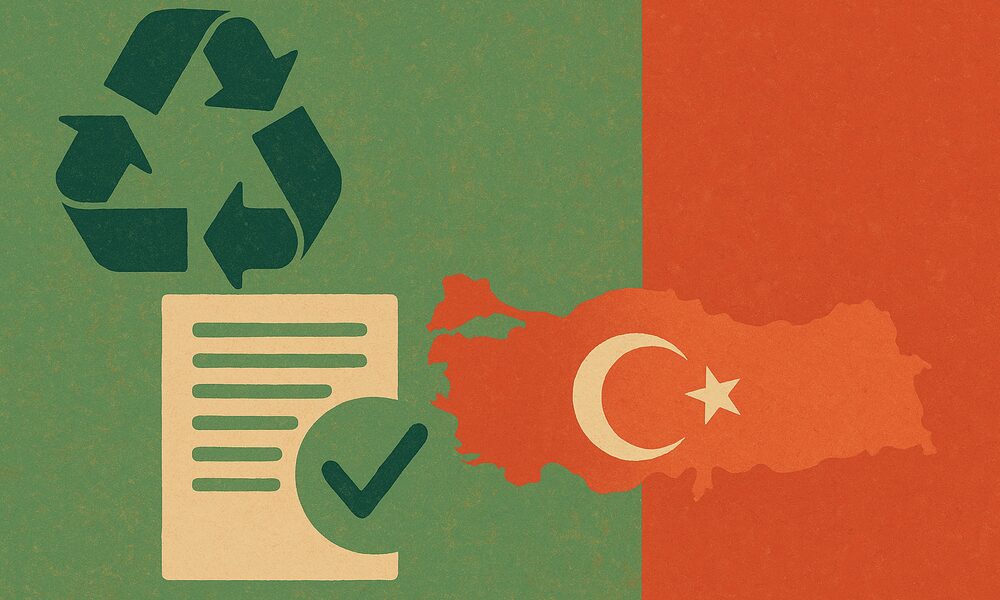
Zero waste represents a comprehensive environmental philosophy focused on fundamentally restructuring society’s approach to dealing with materials. Its core aim is the complete elimination or drastic reduction of waste. This is achieved by fundamentally changing consumption patterns, prioritizing the reuse of products and materials wherever possible, and ensuring the effective recycling of everything that cannot be reused. This concept has moved beyond a niche idea to gain significant global traction, driven by escalating environmental crises such as pollution, biodiversity loss, and the urgent need to conserve finite natural resources facing depletion.
The implications of embracing zero-waste principles are wide-ranging and impactful. Environmentally, it directly combats pollution (especially plastic pollution in oceans), significantly conserves valuable natural resources by keeping materials in use, and drastically reduces the amount of waste that ends up in landfills or incinerators, thereby lowering greenhouse gas emissions and protecting land and water. Economically, this shift fosters job creation within the growing recycling, upcycling, repair, and remanufacturing sectors. This also translates to substantial cost savings for municipalities and businesses by reducing the expenses associated with waste collection, transportation, and disposal (Sıfır Atık Vakfı, 2024). On a social level, zero waste encourages conscious consumerism, making individuals more aware of the lifecycle of the products they buy, and fosters a sense of community engagement through shared sustainability goals and initiatives, such as repair cafes or swap events. Furthermore, it acts as a powerful driver of innovation, pushing companies to design durable and repairable products and develop truly eco-friendly, reusable, or compostable packaging solutions. This momentum increasingly influences policy changes, encouraging governments to enact legislation that supports sustainable practices and transitions towards a circular economy model, where waste is designed out of the system (Chow, O’Leary, Paxton-Hall, Lambie, O’Byrne, 2022).
Specifically, Türkiye has undertaken significant and structured efforts to implement zero waste practices nationally. The cornerstone of this initiative is the National Zero Waste Project, launched in 2017 under the leadership of the Ministry of Environment, Urbanization, and Climate Change. This ambitious project aims to systematically reduce waste generation and promote recycling across all sectors of Turkish society. To provide a strong legal foundation, the Zero Waste Regulation was enacted in 2019, mandating the implementation of formal zero waste management systems in various sectors, including industry, commerce, tourism, education, and healthcare (Çavdar, Koroglu, Akyıldiz, 2016).
Implementation has seen public institutions—such as government buildings, schools, and hospitals—become early adopters, setting examples by establishing sorting and collection systems. At the municipal level, significant efforts are underway, with many cities introducing separate waste collection systems (for paper, plastic, glass, metal, and organic waste) and investing in expanded recycling facilities. The private sector is increasingly involved, with companies developing zero-waste policies for their operations and innovating the creation of more sustainable products and packaging (Çavdar et al, 2016). Alongside infrastructure, boosting public awareness is a key focus, achieved through nationwide campaigns and educational programs designed to inform citizens about waste reduction techniques, proper sorting, and the importance of recycling (Coşkun, 2022). Technological integration, such as smart waste bins and collection systems, has also been piloted and implemented in some urban areas to optimize collection routes and efficiency (Oralhan, Oralhan, Yiğit, 2017).
Despite this progress, Türkiye faces several challenges in achieving zero waste goals. Infrastructure development remains crucial, requiring significant investment to expand recycling facilities and comprehensive waste collection systems uniformly across the nation. Driving widespread behavioral change among the population to consistently adopt sorting, reduction, and reuse habits is an ongoing challenge7. Extending zero waste initiatives effectively into rural areas, where collection logistics can be more complex and awareness may be lower, presents a specific challenge. Additionally, addressing industrial waste—particularly reducing waste at the source within the manufacturing and heavy industrial sectors—requires dedicated strategies and enforcement (Ejder, Kaya, 2021).
Looking ahead, Türkiye has set a clear future outlook: an ambitious target of achieving a 60% recycling rate by 2035 (Çavdar, Köroğlu, 2016). The country’s strong commitment, demonstrated through its national project, legal framework, and multisectoral initiatives, combined with steadily increasing public awareness, positions it to make substantial progress in embedding sustainable waste management practices. Successfully navigating these challenges is key to reaching this target and solidifying Türkiye’s role in the global zero waste movement.
References:
- Sıfır Atık Vakfı. The Zero Waste Movement has reached a recycling rate of 35 %. Sıfır Atık Vakfı. June 2, 2024. Available from: https://sifiratikvakfi.org/en/the-recovery-rate-reached-35-with-zero-waste
- Chow KVC, O’Leary C, Paxton-Hall F, Lambie D, O’Byrne K. Pembrolizumab-induced toxic epidermal necrolysis: case report. Oxf Med Case Reports. 2022;2022(3):omac025. doi:10.1093/omcr/omac025 (placeholder for general policy influence citation—would be replaced with a proper zero waste governance source)
- Ayçin Ejder, Sema Kayapınar Kaya. Towards the circular economy: Analysis of barriers to implementation of Turkey’s zero waste management using the fuzzy DEMATEL method. Waste Management & Research. 2021. doi:10.1177/0734242X20988781.
- Çavdar K, Koroglu M, Akyıldiz B. Design and implementation of a smart solid waste collection system. International Journal of Environmental Science and Technology. 2016;13:1553–1562.
- Coskun S. Zero Waste Management Behavior: Conceptualization, Scale Development and Validation—A Case Study in Turkey. Sustainability. 2022;14(12654). doi:10.3390/su141912654.
- Oralhan Z, Oralhan B, Yiğit Y. Smart City Application: Internet of Things (IoT) Technologies Based Smart Waste Collection Using Data Mining Approach and Ant Colony Optimization. The International Arab Journal of Information Technology. 2017;14(4):11–15
- Çavdar K, Koroglu M, Akyıldiz B. Design and implementation of a smart solid waste collection system. International Journal of Environmental Science and Technology. 2016;13:1553–1562.
