

Uncategorized
European Commission Supports French Offshore Project of 11 Billion

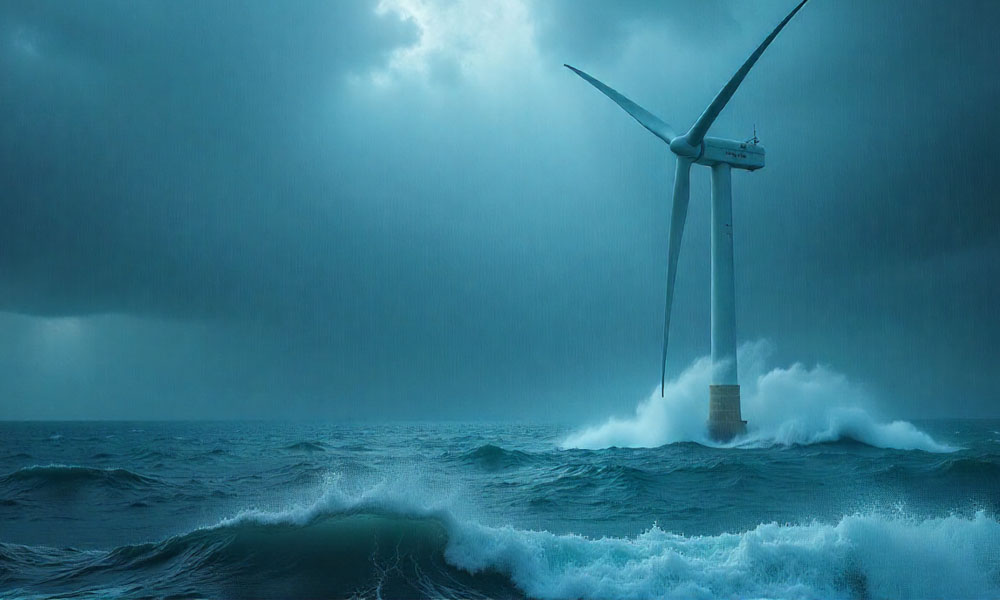
The European Commission has approved a €11 billion French scheme to support offshore wind energy in line with the objectives of the Clean Industrial Deal. This measure will contribute to the transition towards a net-zero economy and reaching the renewable energy target set at EU level for 2030. The scheme was approved under the Clean Industrial Deal State Aid Framework (‘CISAF’) adopted by the Commission on 25 June 2025.
The French measure
France notified to the Commission, under the CISAF, a €11 billion scheme to support the development of offshore wind energy and boost this clean tech industry in the EU in line with the objectives of the Clean Industrial Deal. The scheme will run for 20 years.
The measure will support the construction and operation of three floating offshore wind farms: one in the sea off the coast of Southern Brittany and two others in the Mediterranean Sea. Each windfarm is expected to have a capacity of around 500 MW, and to generate around 2,2 TWh, equivalent to the annual consumption of 450 000 French households.
The aid will be granted on the basis of a transparent and non-discriminatory bidding process, which will be organised to select one beneficiary per offshore zone. Resilience has been included as tender prequalification and award criterion in order to diversify wind turbine and main specific components supply chains to reduce dependency on imports from China.
Under this scheme, the aid will take the form of a monthly variable premium under a two-way contract for difference (‘CfD’), which will be calculated by comparing a reference price, determined in the tender offer of the beneficiary (‘pay as bid’), to the market price for electricity.
Key debates around this development include:
CISAF as a New State Aid Paradigm
Precedent-setting approval: This is the first major project greenlit under the Clean Industrial Deal State Aid Framework (CISAF), establishing a blueprint for future state-backed clean tech investments. The scheme’s compliance with CISAF Sections 3 and 4.1.2 validates mechanisms like competitive bidding and two-way Contracts for Difference (CfDs) as templates for other EU members.
Broader CISAF leverage: Analysts note the framework now enables member states to deploy aid across five strategic areas: renewable acceleration, industrial decarbonization, clean tech manufacturing, electricity price relief, and investment de-risking – with France’s wind farms exemplifying the “renewable acceleration” pillar.
Geopolitical Resilience vs. Chinese Dominance
Supply chain diversification: The tender’s mandatory “resilience criteria” require bidders to reduce reliance on Chinese wind components, reflecting EU efforts to build self-sufficient clean tech supply chains. This aligns with the Net Zero Industry Act’s goals but raises concerns about short-term cost increases and project delays.
Floating wind as strategic advantage: France’s focus on floating turbines (deployable in deep Mediterranean/Bay of Biscay waters) positions the EU to exploit untapped offshore potential, countering China’s lead in fixed-bottom turbine manufacturing.
2030 Targets: Progress Amid Broader Shortfalls
Projected impact: The three 500 MW farms will add 1.5 GW to France’s grid by 2032–2034, generating 6.6 TWh annually – enough for ~1.35 million homes. This supports France’s goal of 41.3% renewables by 2030 but remains insufficient for its national contribution gap (-9%-points vs. EU targets).
EU-wide target risks: While the scheme aids the EU’s 45% renewables goal, analyses show 11 member states (including Germany and Sweden) project policy gaps in their National Energy Climate Plans (NECPs). BloombergNEF warns of a 9% overshoot in 2030 emissions without accelerated action.
Table: Key EU Member States’ Renewable Energy Contributions vs. Projections
| Country | NECP Contribution | Projected Gap | Key Challenges |
| France | 9%-points below target | ~3–4% | Policy implementation delays |
| Spain | 6%-points above target | None | Strong solar/wind deployment |
| Sweden | Not specified | ~9% | Grid constraints |
| Slovenia | 13%-points below target | ~9% | Permitting bottlenecks |
Floating Wind Tech: Costs and Scalability
Innovation driver: Floating turbines could unlock 80% of Europe’s offshore wind potential in deep waters, but high costs (€11bn for 1.5 GW) and nascent supply chains pose hurdles. France’s CfD model mitigates revenue risks, attracting majors like RWE and TotalEnergies 2611.
Integration challenges: Grid upgrades and port infrastructure investments are needed to scale beyond pilot projects. The Mediterranean’s limited offshore wind ports could delay the 2032–2034 timeline 1113.
Policy Tensions: State Aid vs. Market Dynamics
Balancing competition: Critics warn such large subsidies could distort intra-EU competition, though the Commission defends the scheme’s “transparent bidding” and CfD safeguards (e.g., suspending payments during negative electricity prices).
Funding equity debates: Eastern EU states argue Western members benefit disproportionately from CISAF due to superior fiscal capacity, risking a “two-speed” energy transition
A Microcosm of Europe’s Energy Transition
France’s wind initiative exemplifies the EU’s push to merge climate action, industrial strategy, and geopolitical resilience. However, it also reveals tensions between national ambitions and collective targets, state intervention and market competition, and short-term costs versus long-term gains. Success hinges on overcoming supply chain bottlenecks, accelerating NECP revisions, and ensuring CISAF benefits reach all member states equitably. As the Clean Industrial Deal’s first major test, this scheme will shape Europe’s clean tech trajectory for decades
