
Industrial Economy
Turkish glass industry demands more protectiveness

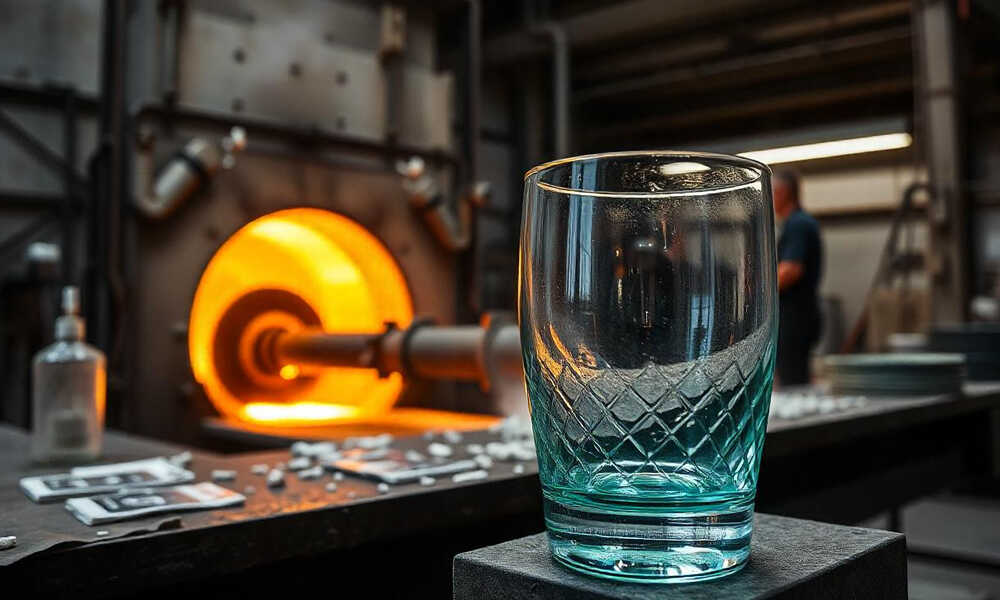
The Turkish glass sector, which has a deep-rooted history of ninety years, demands that measures be increased to protect domestic production against imports that create unfair competition and that these measures also cover imports under the Inward Processing Regime (IRR). Drawing attention to the risk of countries such as China, Malaysia and Vietnam, to which the US applies protectionism, turning to Turkey and Turkey’s main market, Europe, Tansu Kumru, Vice President of the Cement, Glass, Ceramics and Soil Products Exporters’ Association (ÇCSIB), said, “In order to eliminate this risk, it is of great importance to implement additional taxes and surveillance fees that provide quick results, as well as new measures when necessary, in addition to long-term measures such as anti-dumping.” Kumru also stated that they aim to increase capacity in the sector, especially in energy glass, this year and to strengthen in the European, US and Middle Eastern markets.
Representatives of the Turkish glass sector, which has become the world’s production base with a production and processing capacity of over four million tons, came together in Ankara hosted by the Cement, Glass, Ceramics and Soil Products Exporters’ Association (ÇCSİB). The meeting, which was held with the participation of public, sector and company representatives, especially ÇCSİB Deputy Chairman Tansu Kumru and Ministry of Trade Export General Manager Mehmet Ali Kılıçkaya, discussed the current status of the sector, risks, opportunities, solution suggestions and future goals.
Tansu Kumru: “The protectionism applied by the US to China is both a risk and an opportunity for our country”
ÇCSİB Deputy Chairman Tansu Kumru stated that the Turkish glass sector, which was established in 1935, exported to more than 170 countries in its 90th year and is one of the leading sectors that reduced Turkey’s current deficit with a 79 percent domestic added value rate. “In 2024, which was a challenging year beyond expectations, we focused on operational efficiency and value-added products and provided uninterrupted products and services both in our country and globally. This year and the upcoming period, however, contain great opportunities as well as great risks. The changing balances in the Middle East and the restructuring process in this geography offer great opportunities for all areas of glass activity, especially architectural glass that provides input to the construction sector. On the other hand, the USA’s increasing protectionism against Asian countries, especially China, will also ensure our country’s growth in the US market. However, this protectionism by the USA also brings with it a great risk. Because countries such as China, Malaysia and Vietnam, which will not be able to turn to the US market, will direct their capacities to our country and to Europe, which is our main export market. If we cannot take the necessary protectionist measures, these countries, which we have difficulty competing with due to their low-cost production, may enter not only our export markets but also our domestic market more,” he said.
“Protectionist measures should be increased to include DİR”
Kumru, who stated that they are working in cooperation with the Ministry of Trade against this risk, said, “Increasing the protectionist measures in place, long-term measures such as anti-dumping, as well as increasing additional taxes and surveillance fees that provide quick results, and implementing new measures when necessary are of great importance especially for the glassware, glass fiber, flat glass and processed glass business areas. On the other hand, we demand that the protectionist measures implemented against imports that create unfair competition be applied to imports made under the Inward Processing Regime (DİR). Because the current DİR application especially puts our manufacturers operating in the white goods glass and glass fiber sectors in a difficult situation.” Kumru continued as follows; “As ÇCSIB, we believe that domestic production should be protected against imports that create unfair competition in order for the glass sector to achieve its export targets worldwide, especially in Europe, the USA and the Middle East. In this context, we will continue our activities under the roof of ÇCSIB with the TurkishGlass brand to increase our exports on the one hand and protect our sector against these risks on the other hand.”
“Our increasing capacity is sufficient for both our country and foreign markets”
Kumru, who drew attention to the fact that the glass sector increases its production and processing capacity every passing day with investments in innovative products, said, “This period, we will ensure that the standards and regulations created to build almost zero-energy buildings are put into practice with energy-saving coated glass investments. In addition, we will quadruple our production capacity in this segment with investments made for the production of energy glasses that provide maximum efficiency in solar panels. Turkey is also the most important player in the world with both its strong brands and its production and design power in glass household goods. Our capacity allows us to diversify our export markets and deepen in existing markets, as well as being sufficient to meet 100 percent of our country’s glass needs. Therefore, we will not need to import glass from China and other countries.



