
Industrial News
Aegean Free Zone sends 618 tonnes of waste for recycling

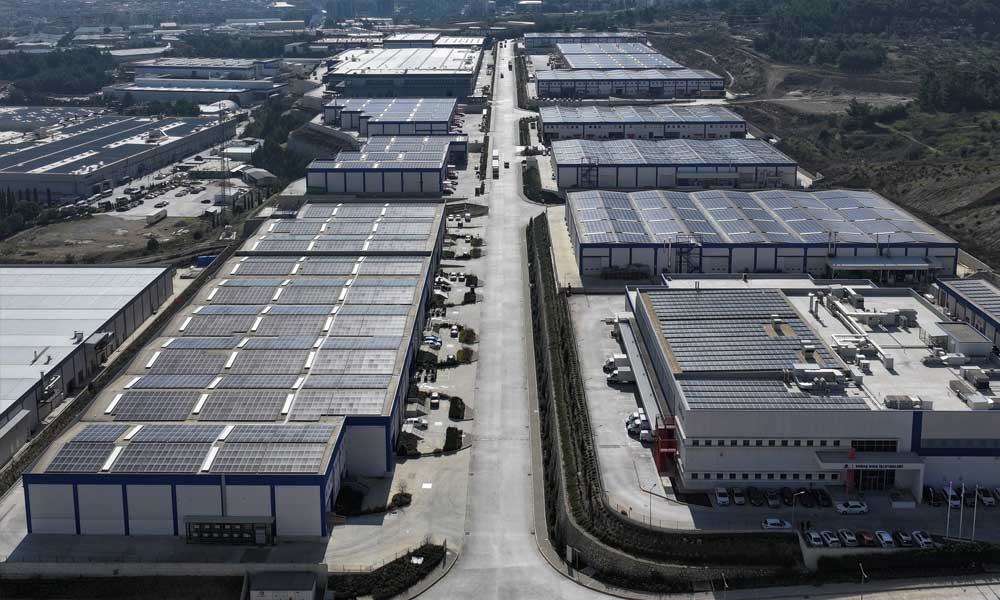
Paper and cardboard accounted for 387 tonnes of the waste sent for recycling at the Aegean Free Zone in the first 10 months of 2026. Zone operator ESBAŞ plans to start replacing lawns with drought-tolerant landscaping in 2027 to reduce irrigation water use.
As the UN Climate Change Conference (COP31) takes place in Antalya from 9 to 20 November, ESBAŞ, the developer and operator of the Aegean Free Zone, released figures on recycling, water efficiency and renewable energy at the industrial site in İzmir.
Paper and cardboard make up the largest share of recycled waste
Of the 618 tonnes of waste sent for recycling between January and October, 387 tonnes were paper and cardboard, 167 tonnes were plastic, 43 tonnes were metal and 21 tonnes were pallets. Paper and cardboard accounted for about 63% of the total.
ESBAŞ estimates that its recycling activities avoided 6,847 kilograms of greenhouse gas emissions. The company also estimates that the paper and cardboard recycled was equivalent to preventing the felling of 7,740 trees.
Drought-tolerant landscaping covers 9,881 square metres
Areas planted with low-water species suited to the local climate now cover 9,881 square metres, or 4.46% of the zone’s landscaped area. Commenting on the landscaping programme, Dr Faruk Güler, Vice Chair of the Board and Chair of the Executive Committee at ESBAŞ, said annual water consumption fell by 30% in 2025 compared with the previous year.

Dr.Faruk Güler
ESBAŞ also began assessing its water footprint in 2026. The company is collecting data to identify where water use is highest and where savings are possible. It submitted five-year plans to reduce consumption and assess alternative water sources to Türkiye’s Ministry of Agriculture and Forestry as part of its application for a Blue Water Efficiency Certificate.
Solar capacity on ESBAŞ buildings reaches 10 MWp
ESBAŞ began installing solar power systems on its own buildings in 2021. According to company figures, total installed capacity reached 10 MWp by the end of 2024. ESBAŞ began calculating its corporate carbon footprint that same year and continues to invest in solar power and energy efficiency to reduce emissions.
